Practical Home Soundproofing in Russia: Smart Solutions for Apartments and Houses
Noisy neighbours, street traffic, train or metro rumble, or the clatter of apartment plumbing — sound problems are common in Russian cities and older housing. This guide explains the principles, room-by-room solutions, material choices available on the Russian market, cost estimates, DIY tips and when to hire professionals.
Why soundproofing matters
— Improves sleep, concentration and comfort.
— Raises apartment value and livability in panel (панельный), brick (кирпичный) and monolith (монолит) buildings.
— Can reduce noise by 10–45 dB depending on scope and quality of work.
Types of noise and how they differ
— Impact noise: footsteps, slamming doors, banging (transmitted through structure).
— Airborne noise: speech, TV, music, traffic (transmitted through air).
— Low-frequency noise: trucks, subways, machinery (harder to block).
Different strategies are used for each: mass and airtightness for airborne; decoupling and absorption for impact; heavy/dense barriers for low frequencies.
Basic principles of effective soundproofing
— Mass: add mass to block sound (heavy panels, gypsum boards, dense boards).
— Decoupling: separate surfaces so vibrations don’t pass directly (floating floor, suspended ceiling, resilient channels).
— Damping: convert vibration energy to heat (viscoelastic membranes, damping compound).
— Absorption: reduce reverberation inside a room (mineral wool, acoustic panels).
— Airtightness: seal gaps, sockets and joints — even small gaps leak sound.
Room-by-room solutions
Windows (one of the most effective upgrades)
— Replace single-glazed frames with good quality пластиковые окна (double- or triple-glazed units, стеклопакеты). Two-chamber units help with low-frequency noise.
— Add laminated glass for better sound performance.
— Improve sealing: add brush seals (щеточные уплотнители) or rubber gaskets, seal frames from inside with acoustic sealant.
— Install secondary glazing (вторичный контур) — a secondary frame or soundproofing window inside the existing frame — good for heritage windows or rentals.
— Cost: replacing a window unit can range broadly (ориентировочно) from ~8,000–40,000 ₽ per window depending on size, glazing and quality.
Doors
— Install a solid-core or soundproof door with good seals (threshold seal, perimeter gasket).
— Use acoustic door sweeps and seal gaps.
— For flats, consider an interior acoustic door for living areas; for entrances, thicker metal/wood doors with sound insulation cores.
— Cost: interior acoustic doors ~6,000–40,000+ ₽; entrance doors with insulation more.
Walls
— For airborne noise between apartments: build an additional stud wall with mineral wool (mineral wool: каменная вата / стекловата), resilient channels and 2 layers of gypsum board (ГКЛ), or use specialized soundproof panels (акустические панели).
— For thin panel partitions, decoupling and mass help most (resilient channels + 2xGKL + mineral wool).
— Use acoustic sealant at edges and around sockets.
— For limited budgets, wall-mounted heavy bookshelves, textiles and acoustic panels reduce reverberation and help some.
— Expected improvement: properly constructed double-stud or decoupled wall can add 20–40 dB depending on initial wall.
Floors
— Impact noise (footsteps): install floating floor systems with elastic underlayment (плавающий пол) — cork, rubber, специальная подложка, or mineral wool under raised floor.
— For apartments, an acoustic screed (звукопоглощающая стяжка) or resilient underlay beneath laminate/laminate/паркет reduces impact.
— For houses, consider isolation bearings or floating subfloor.
— Carpet and rugs also help significantly on impact and reverberation.
— Cost: underlay materials from ~200 ₽/m²; full floating floors including materials and installation vary widely 1,000–5,000 ₽/m² depending on complexity.
Ceilings
— Suspended ceiling with resilient hangers and mineral wool between floor joists reduces transmitted noise — effective against footsteps from upstairs.
— For strong sources, a multi-layer solution: resilient channels, two layers of GKL with damping compound.
— Watch for building height loss: suspended ceilings reduce ceiling height by 5–15+ cm.
— Cost: expect higher costs due to labor and materials; oriented per project.
Pipes, vents and ventilation
— Sound can transmit through ventilation shafts and plumbing risers. Seal penetrations and use flexible connectors.
— For ventilation noise, install silencing elements: acoustic diffusers / mufflers (глушители) in ductwork, or sound-absorbing lining.
— Ensure that sealing doesn’t block required ventilation; comply with building codes.
Materials commonly used in Russia
— Mineral wool (каменная вата, стекловата): good absorption; use dense types for walls.
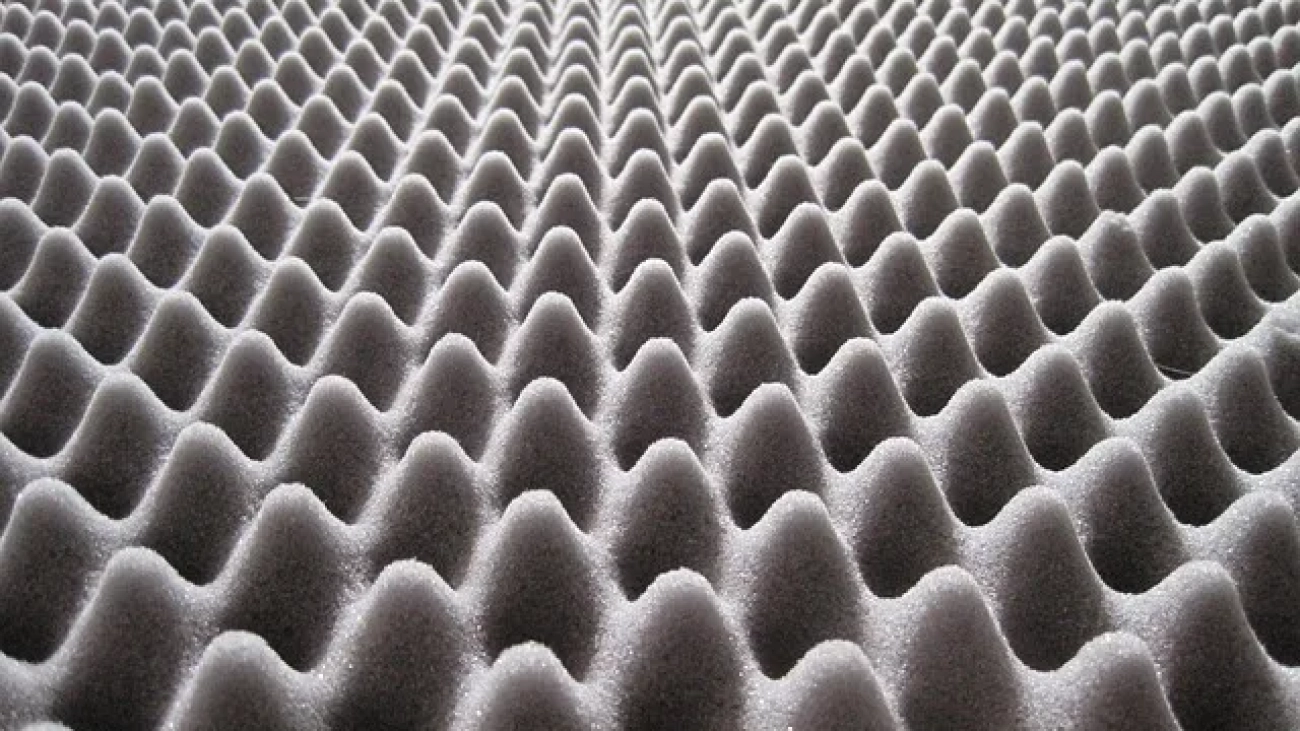
— Acoustic foam/panels (акустические панели): useful for interior reverberation control but limited blocking.
— Mass-loaded vinyl / битумные или виниловые мембраны: add mass and damping.
— Gypsum board (ГКЛ/Gypsum fiber): use 2 layers, with damping compound for increased performance.
— Resilient channels, spring hangers, acoustic mounts (виброизоляторы).
— Acoustic sealant (акустический герметик) and expanding foam for gaps.
— Soundproof doors and window systems from local manufacturers or custom shops.
DIY vs hiring professionals
— DIY is realistic for window seals, rugs, door seals, wall hangings, secondary glazing, and some floating floors.
— Structural decoupling (floating floors, suspended ceilings with resilient mounts, full wall rebuild) is best done by specialists experienced in acoustic performance.
— Hire pros for complex problems like low-frequency rumble, noise from ventilation shafts, or when you need certification/guarantees.
— When hiring: request sound reduction estimates (Rw or laboratory measurements if needed), project drawings, and written guarantees.
Budgeting and expected results
— Small upgrades (seals, rugs, curtains, acoustic panels): low-cost, visible comfort improvement plus modest dB reduction (3–10 dB).
— Window replacement + door seals: medium cost, large impact on airborne noise from street (10–25 dB).
— Full wall/floor/ceiling interventions: high cost, potentially 20–45 dB improvement depending on scope.
— Always get several quotes and ask for references and before/after measurements if possible.
Practical step-by-step plan for an apartment
1. Diagnose: identify dominant sources and paths (windows, walls, ceilings).
2. Start inexpensive: seal gaps, add door/window